
How to Identify High Quality Pet Apparel: 7-Step Guide
Table of Contents
- Step 1: Check the Fabric and Textile Composition
- Step 2: Inspect Stitching, Seams and Construction Quality
- Step 3: Test Hardware Integrity and Fastener Durability
- Step 4: How to Measure a Dog for Clothing That Fits Properly
- Step 5: Check Safety Certification and Regulatory Compliance
- Step 6: The Made-to-Order Pet Apparel Benefits That Signal Quality
- Step 7: Evaluate Maintenance, Longevity and Sustainable Sourcing
- Conclusion: Making Confident Choices for Your Dog
- Frequently Asked Questions
Last Updated: September 16, 2026
Step 1: Check the Fabric and Textile Composition
The fastest way to judge how to identify high quality pet apparel is to read the label before the price. This guide from Proud Pup Club walks through seven checks that separate well-made dog clothing from throwaway novelty items.
Natural vs Synthetic Fibres: What Works for Dogs
Natural fibres such as cotton and wool offer breathable fabric qualities and thermal regulation, which matters for dogs that overheat easily. Synthetics like polyester and nylon bring abrasion resistance and hold shape through repeated washing.
Denier Rating, Abrasion Resistance and Tensile Strength
Denier rating measures fibre thickness: higher numbers mean denser, tougher fabric. For outer layers facing mud, brambles and pavement, higher denier means better wear and tear resistance.
Ask yourself three questions:
- Does the fabric feel substantial, or thin enough to tear with a tug?
- Does the weave look tight and even, with no visible gaps?
- Does the label name the fibre blend clearly, or stay vague?
Step 2: Inspect Stitching, Seams and Construction Quality
Turn the garment inside out. Reinforced stitching at stress points, the neck, chest and leg openings, is the single clearest sign of construction quality in dog clothing. If those seams look thin or loose, the coat will fail long before the fabric does.
Step 3: Test Hardware Integrity and Fastener Durability
Fastener durability decides whether a coat stays on during a walk or ends up in a hedge, and the difference between good and bad hardware is mechanical. Knowing what each component does under load lets you test it in seconds.
What Each Piece of Hardware Has to Do
- Zips. The tell is the slider: a stamped, thin slider twists under sideways pull and derails; a die-cast slider with a locking mechanism holds its line. Look for a branded zip pull (YKK is stamped on the slider) because branded zips come with a known pull-strength rating.
- Buckles and side-release clips. These carry the garment's entire tension when a dog lunges. Acetal (often sold under the Duraflex name) flexes and returns; cheap polystyrene-blend clips whiten and crack at the hinge. A sharp crack or white stress mark at the pivot means brittle moulding.
- D-rings and leash attachment points. If the garment doubles as a walking harness, the D-ring is load-bearing, not decoration. Welded stainless-steel or nickel-plated rings hold shape; split and thin stamped rings deform. Run a fingernail around a welded ring, there should be no gap at the join.
- Hook-and-loop (Velcro-style) strips. Grip strength falls away with lint and fur. A quality strip has a dense hook face and a loop face that resists peeling when you lift one corner slowly. If it separates with a light pull, it will fail on a moving dog.
Corrosion Resistance: The Mechanism That Kills Cheap Hardware
Hardware integrity also means corrosion resistance. Rain, mud and road salt are electrolytes; when two dissimilar metals touch in an electrolyte, the less noble metal corrodes preferentially, galvanic corrosion. That is why a plated zinc buckle on a stainless D-ring pits first at the contact point. Powder-coated or anodised finishes slow this down; bare plating does not.
A Practical Hardware Test You Can Run Before You Buy
- Zip test. Zip and unzip three times, steady resistance, no catching or jumping teeth. Pull the closed sides apart gently; a good zip resists, a bad one splits.
- Clip test. Flex the side-release clip ten times. Listen for cracking and look for whitening at the hinge.
- Ring test. Hang the garment by its D-ring and tug downward. A welded ring holds; a split or stamped ring opens.
- Corrosion check. Inspect contact points where metal meets metal or fabric. Green or white residue on a new garment is a warning sign.
If a buckle flexes alarmingly, a zip snags, or a D-ring has a visible gap, return it. Hardware is the cheapest part to upgrade and the most common point of failure, so a brand that cuts corners here cuts corners everywhere.
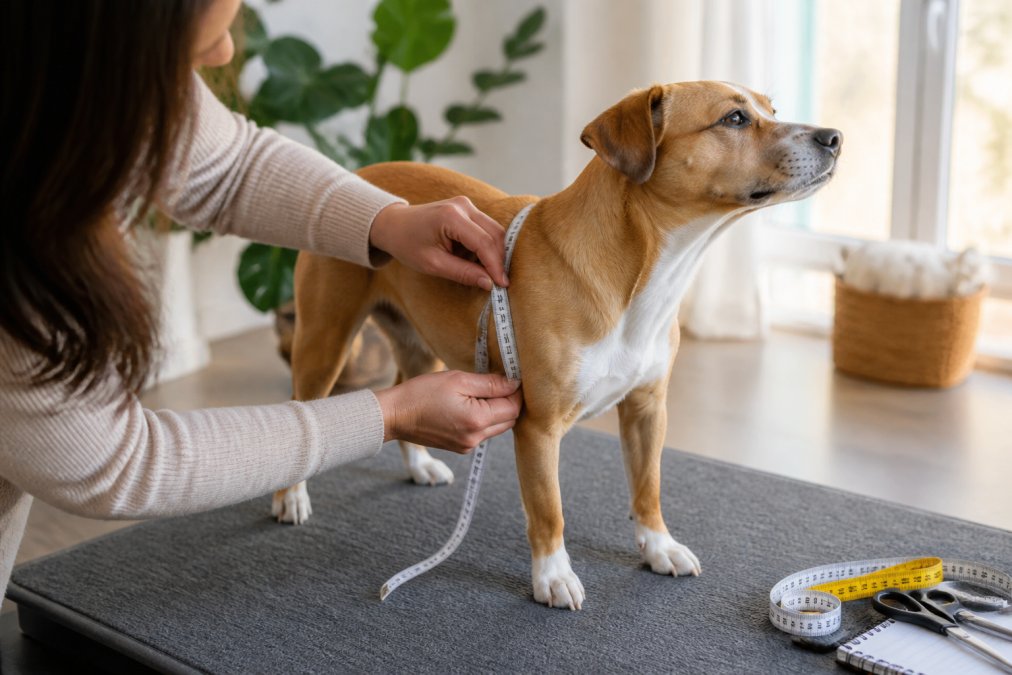
Step 4: How to Measure a Dog for Clothing That Fits Properly
How to measure a dog for clothing comes down to three numbers: chest girth, back length and neck circumference. Measure the widest part of the chest just behind the front legs, the base of the neck, and from the base of the neck to the tail.
Size-Specific Quality Indicators to Look For
Fit consistency varies between brands, so check the size chart against your own measurements rather than trusting labels like "medium". Good ergonomic design shows in leg openings that sit clear of the body and adjustable chest and belly straps, allowing full movement without fastener strain.
Step 5: Check Safety Certification and Regulatory Compliance
Safety certification and regulatory compliance are where most cheap pet clothing quietly fails. In the UK, pet apparel is covered by general product safety law, and any chemicals used in dyes or finishes fall under UK REACH, enforced by the Health and Safety Executive. You can check the HSE guidance on UK REACH for how chemical restrictions apply.
Step 6: The Made-to-Order Pet Apparel Benefits That Signal Quality
Made-to-order pet apparel benefits go beyond sustainability. When a garment is cut for an order rather than a warehouse pallet, there is less pressure to cut corners on quality assurance, and small-batch production makes fabric traceability easier.
Step 7: Evaluate Maintenance, Longevity and Sustainable Sourcing
Washability is a practical quality test, but the useful question is how you verify it before you buy and separate genuine longevity from marketing language. This is also where most buying advice has a gap: pet-specific textile toxicity.
Pre-Purchase Longevity Tests You Can Run Yourself
Colorfastness and shrinkage are the two failure modes that turn a good coat into a rag, and both are testable in minutes.
- Colour bleed test. Dampen a white cloth and rub it firmly along an inside seam and the lining. Ready dye transfer means it will bleed onto pale fur, car seats and laundry. A little surface dye is normal; a strong transfer is not.
- Shrinkage and distortion test. Check the care label for a stated shrinkage allowance. A loose knit labelled 'wash cold, dry flat' will move; a tight, dense weave with stabilised seam tape distorts far less.
- Pilling and abrasion test. Rub the fabric against itself under firm pressure for ten seconds. Loose surface fibres ball up quickly on low-quality blends; tightly spun yarns resist.
- Hardware-after-wash check. After the first wash, re-test zips and clips. Detergent residue and heat expose weak plating and brittle plastic.
Pet-Specific Textile Toxicity: The Check Most Guides Skip
Most buying guides ignore pet-specific textile toxicity, the risk that dyes, finishes or adhesives are harmful when a dog licks, chews or sleeps against them. Dogs absorb more through mouth and skin relative to body weight and spend hours in direct contact, so a garment's chemical profile matters more for them than for us.
The substances worth asking about are specific, not vague:
- Azo dyes. Certain azo dyes break down into aromatic amines restricted in textiles under UK REACH. A brand that can name its dye class, reactive, vat or pigment, knows its supply chain.
- Formaldehyde-based finishes. Used as anti-wrinkle and anti-shrink agents, these can off-gas and irritate skin. Question 'easy-care' and 'no-iron' claims.
- Flame retardants. Rare in pet apparel but occasionally present in cheap synthetic fleece. They are not required for pet clothing and are best avoided.
- Heavy metals in dyes and hardware coatings. Lead and cadmium have historically appeared in cheap metal trims and pigment dyes, exactly what UK REACH restrictions target.
- Adhesives and heat-transfer prints. Screen-printed or heat-applied graphics can use plasticiser-heavy inks. If a print feels thick and rubbery and smells of solvent when new, treat it with caution.
Sustainable and Ethical Sourcing: What Genuine Looks Like
Sustainable and ethical sourcing shows up in small details rather than slogans: recycled or certified fibres (named certifications, not the word 'eco'), minimal packaging, and a supply chain the brand describes in specifics. A brand that can name its mill, fibre origin and dyehouse is doing the work; one that answers 'sustainable materials' is not.
| Quality Check | What to Look For | Why It Matters |
|---|---|---|
| Fabric composition | Named fibre blend on the label | Predicts durability and breathability |
| Stitching | Reinforced seams at stress points | Prevents early seam failure |
| Hardware | Corrosion-resistant zips and clips | Survives rain, mud and washing |
| Fit | Chest, back and neck measurements | Prevents rubbing and restriction |
| Certification | UK REACH compliance, safe dyes | Protects dogs that chew or lick |
| Toxicity | Named dye class, no formaldehyde finish | Reduces chemical exposure for dogs that lick or chew |
| Longevity | Passes colour bleed and shrinkage tests | Confirms the garment will outlast a season |
Conclusion: Making Confident Choices for Your Dog
Judging high quality pet apparel takes ten minutes of close inspection and saves you from replacing a failed coat every season. Check the fabric, seams, hardware and fit, and ask any brand to explain its sourcing before you commit.
Shop your breed and get apparel built to last.
Frequently Asked Questions
What fabrics are best for high-quality dog clothing?
Look for breathable natural fibres like cotton or bamboo for mild weather, and synthetic blends with a denier rating of 300D or higher for waterproof jackets. Fleece linings provide warmth without bulk. Avoid stiff, scratchy materials that restrict movement. The best materials for dog clothes balance thermal regulation, washability and comfort, so your dog can wear them without irritation or overheating during walks.
Are there specific safety standards for pet apparel in the UK?
Pet apparel in the UK is not covered by a single dedicated safety standard, but it does fall under general product safety regulations. Check for safety certification marks on fasteners and small parts that could detach and become choking hazards. Look for non-toxic dyes and hypoallergenic materials, especially if your dog has sensitive skin. Reputable brands will state their regulatory compliance and quality assurance processes openly.
How do I know if a dog sweater is well-made?
Turn it inside out and check the seam allowance for reinforced stitching and clean finishing. Tug gently on the fasteners and hardware to test durability. A well-made sweater holds its shape after washing, with no loose threads or skipped stitches. Look for consistent fit around the neck and chest without being restrictive. Abrasion resistance and stretch recovery are also good indicators of quality craftsmanship.
Why is made-to-order pet apparel better for the environment?
Made-to-order production avoids the warehouse waste created when mass-produced items go unsold and end up in landfill. Because each piece is made only when ordered, there is less excess stock, lower energy consumption from storage, and reduced textile waste. This model also supports manufacturing transparency, so you can trace where materials come from and how garments are assembled, making it easier to verify sustainable and ethical sourcing claims.
The gap between good and poor dog clothing is rarely visible in a product photo. It lives in the seam allowance, the denier count and the honesty of the label. Buy from makers who can answer those questions, and your dog gets a garment that fits, lasts and stays safe against their skin.